

IIIT-Bangalore named NITI Aayog lead knowledge institution
Mon, 13th Apr 2026
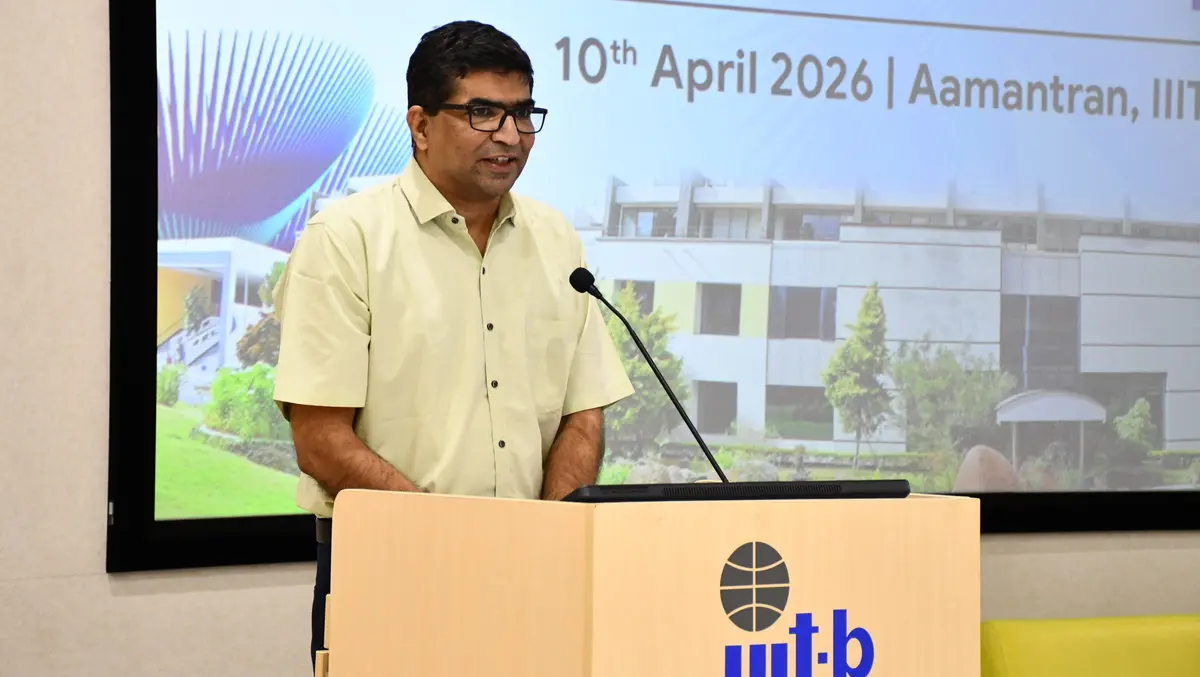
IIIT-Bangalore has been nominated as a Lead Knowledge Institution under NITI Aayog's State Support Mission. The institute formally marked the appointment at an inauguration in Bengaluru.
The designation places IIIT-Bangalore among the institutions selected to work with states and union territories under a national programme focused on structured policy support.
The State Support Mission is a NITI Aayog umbrella initiative that aims to strengthen institutional engagement with states and union territories. Its stated objective is to help them meet socioeconomic goals by 2047 through data-led roadmaps aligned with national priorities and local strengths.
At the inauguration, Prof. Debabrata Das welcomed attendees on behalf of the institute. K. S. Rejimon, Joint Secretary and Mission Director, State Support Mission, NITI Aayog, formally inaugurated IIIT-Bangalore in its new role, while S. Kalal, Director, State Support Mission, outlined the initiative's aims.
Under the arrangement, IIIT-Bangalore is expected to support evidence-based policymaking through its work in Data Science and Artificial Intelligence. The role will be linked to governance and development work carried out with public sector stakeholders.
Policy role
NITI Aayog's Lead Knowledge Institution model is designed to connect specialist academic and research bodies with the practical needs of governments. IIIT-Bangalore's role centres on analytical support and research inputs for policy design and implementation.
Rejimon described the programme's scope at the event. "LKIs are collaborating with States in critical areas such as governance reforms, sectoral strategies, innovation frameworks and capacity building. Collaborations between Lead Knowledge Institutions, States and NITI Aayog will mobilize domain expertise, bringing to the fore their complementing competencies for achieving larger socio-economic growth objectives," he said.
Kalal said the model reflects a broader shift in how institutions and governments work together on policy problems. "Today's event is important as it reflects a shift towards more structured partnerships between government and knowledge institutions. Another important aspect is the need to build a wider ecosystem. Knowledge institutions can play a role in connecting academia, students and practitioners with public policy challenges. This helps in bringing new ideas and practical solutions into governance," he said.
Research focus
IIIT-Bangalore said its contribution would draw on research in computational methods and public systems. Its academic leadership linked the appointment to work on intervention design in complex social and administrative settings.
Prof. Srinath Srinivasa, Dean R&D, outlined the institute's research perspective. "The inauguration of IIIT-Bangalore as a Lead Knowledge Institute under NITI Aayog's State Support Mission marks a critical step in bridging the gap between computational research and impactful public policy. As Data Science and AI researchers, we are uniquely positioned to tackle complex, large-scale challenges to support governance frameworks driven by evidence and data-driven interventions.
Central to this research mission is the development of an intervention science for complex systems. Societal systems are often characterized by intricate interdependencies where a single change can trigger cascading side-effects or unexpected trade-offs. Our work goes beyond traditional predictive modeling; we are building the frameworks to represent, reason about, and model the stability of these interventions, ensuring that our technical support translates into sustained, positive outcomes for the State Support Mission," he said.
The comments indicate that the institute plans to focus not only on forecasting and analysis, but also on how policy interventions behave in systems where sectors and outcomes are closely linked. That approach is relevant to state-level policymaking, where changes in one area can have unintended effects elsewhere.
Das said the institute sees a direct role for technology and analytics in public administration. "At IIIT-Bangalore, we believe that technology can play a transformative role in governance. IIIT Bangalore being a Lead Knowledge Institution with NITI Aayog's State Support Mission, we are committed to supporting states through data-driven policy research and advanced analytics. By leveraging our expertise in Data Science and Artificial Intelligence, we aim to enable possible actionable insights and contribute to inclusive and sustainable development," he said.
Institutional context
IIIT-Bangalore is an academic and research institute with programmes in Computer Science and Engineering, Electronics and Communication Engineering, Data Science and Artificial Intelligence, and Digital Humanities and Societal Systems. It has also built research activity around applied technology and public systems, making the new assignment consistent with areas it has developed in recent years.
The appointment gives IIIT-Bangalore a formal place in a policy support framework that seeks to blend academic expertise with government priorities. It also signals the growing role of data analysis and AI-related research in the design of state-level governance initiatives in India.