Rising AI workloads are forcing data centre operators to curb power and cooling costs as global electricity use heads towards 1,000 terawatt-hours.
Rising AI infrastructure bills are pushing teams to hunt for idle chips and bottlenecks, as GPUs account for 14 per cent of compute costs.
Its new fabric promises lower latency and more bandwidth for training, as Google links up to 134,000 TPU 8t chips across sites.
Customers will soon get faster, cheaper AI training and inference as Google Cloud adds new TPUs, GPU instances and networking.
Enterprise users can now cut response times by up to 25% while adding ransomware detection, single sign-on and migration tools.
The split design could help firms train larger AI models faster while cutting costs and response times for production workloads.
Better network utilisation could curb emissions from AI racks by about 200 tons of CO2 a year, NeuReality said.
The release aims to ease log searching and dashboard management as engineering teams wrestle with rising telemetry volumes and system complexity.
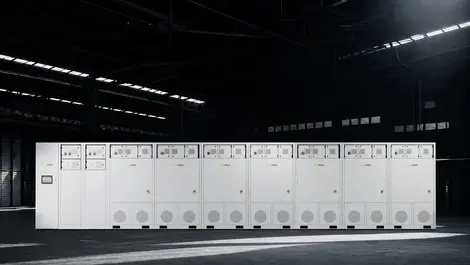
Continuous cell-level monitoring is being extended into Zone 1 and Zone 2 battery rooms, reducing risky site entries and compliance burden.
Demand for AI agents is driving Google Cloud to broaden its stack with new security tools and eighth-generation Tensor Processing Units.
The deal could help blockchain developers reach more regulated markets sooner, as Alchemy expands its multi-cloud setup via OVHcloud's infrastructure.
Customers needing faster database performance can now buy Hetzner’s EX131, which pairs Intel Xeon 6731P chips with Gen5 NVMe storage.
Enterprises could gain tighter control over AI deployments as the new stack combines governance, security and on-premise data sovereignty.
Partners will get bigger incentives and a file assessment tool as Peer Software tries to help customers manage fragmented hybrid storage more quickly.
The funding gives Wasabi room to expand storage capacity and global reach as demand rises for data-heavy AI workloads.
The recognition reflects tighter integration with Google Cloud as customers seek cleaner recovery, stronger backup security and AI-ready protected data.
The vendor’s 99.8% score signals stronger protection for hybrid networks as Miercom found it blocked 100% of phishing URLs and 99.9% of AI malware.
Industrial operators could cut downtime and costs as Schneider Electric and Deloitte target AI-led links between factory systems and business software.
The new tools aim to help firms spot faulty AI outputs and data risks sooner as production deployments outpace monitoring methods.
Enterprises under pressure to control AI data and workloads now have an open alternative to single-cloud setups across cloud, on-premises and edge sites.