Graphics Processing Units (GPU) stories
Automated AI crawlers are driving up CPU and network load for some sites, forcing operators to diagnose traffic before adding capacity.
Businesses should use AI to speed up support, but still leave technical judgement with engineers, says Servers Australia.
Technology firms now face pressure to build systems that can act safely and predictably in the real world, not just score well on benchmarks.
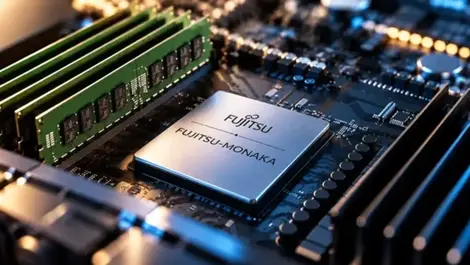
European data centres may get a lower-power AI option as the server is designed to run inference without GPUs and ease cooling pressures.
Many firms are now finding cloud migrations unfinished as production AI drives new spending on inference, data quality and governance.
Businesses must track, adapt and trim AI models in production if they are to keep costs down and avoid performance drift.
Traditional data centre designs are being overtaken as AI clusters push rack loads to 50-100kW and demand liquid cooling, faster builds and more power.
Racks are already pushing 50-100kW, forcing operators to redesign cooling, power and build methods for AI workloads.
AI data centres can cut battery wear and steady erratic load swings by using UPS controls that buffer power instead of waiting for outages.
By 2027, enterprises may shift high-volume AI workloads in-house to cut unpredictable API bills and reduce dependence on outside providers.
Healthcare groups can now screen records as the new models are designed to flag eligibility, privacy and review issues from clinical text.
AI data-centre builders face tighter timing margins as SiTime's new clock families aim to support faster 224G and PCIe 7 systems.
By checking patches before human maintainers do, the system is helping reduce follow-up fixes and security bugs across the Linux kernel.
The new model gives GPU server owners 75% of revenue while Scannit handles sales, pricing and upkeep, as demand for AI compute stays strong.
Data centre operators facing surging AI power demand may avoid full site redesigns as the new portfolio supports rack, pod and hall deployments.
The biggest profits are likely to shift to AI apps and agents, as falling token prices squeeze labs into a utility-style commodity fight.
As firms move AI into production, slow data pipelines are leaving expensive GPUs idle and forcing IT leaders to rethink storage and memory.
Boards are being warned that the real test of AI spending is correct, authorised work per dollar, not how many GPUs sit in a rack.
Better cooling could cut AI data centre resource use while lifting sustained chip performance, as operators seek more useful work per watt.
Rising AI demand is forcing data centres to redesign power systems for faster load swings, tighter efficiency and near-perfect uptime.