NVIDIA stories
Businesses handling sensitive AI data can now run Kubernetes workloads inside trusted execution environments with added attestation and key controls.
Developers could see faster, cheaper agentic coding sessions after Google Cloud added day-one support for Reflection's open-weight Beam model.
The collaborations aim to curb harmful behaviour in open AI models while preserving performance, as enterprises face growing prompt-injection risks.
Businesses can now trial quantum workloads in London as the room-temperature system is already being used for protein design and energy scheduling.
Customers will soon get broader access to NVIDIA Vera Rubin systems on Oracle Cloud Infrastructure, as the pair scale AI capacity for training and agents.
Security teams face growing pressure to map vulnerable encryption now, as Google says a quantum-safe transition should begin well before 2029.
The new services are designed to help enterprises move AI systems into production while keeping latency, data access and agent security under control.
Only 28% of enterprises have moved at least 40% of their AI pilots into production, according to Deloitte research cited by Cloudera.
Smaller sites can now run AI and storage together more cheaply, as the new version targets remote offices and on-premises deployments.
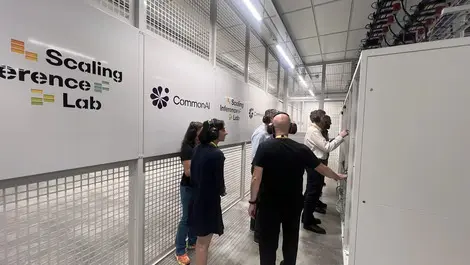
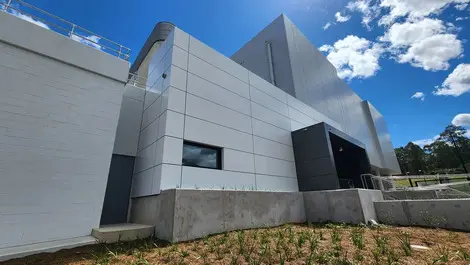
The new sites give businesses a place to test AI projects on security, governance and cost before committing to wider rollouts.
Cities from Liverpool to Gothenburg are using Nvidia's AI tools to cut admin time, improve safety and lower operating costs in public services.
Backed by ARIA, the Harlow campus will host five AI clusters to give UK startups a neutral testbed for rack-scale systems by early 2027.
Banks are backing one of Asia's largest AI infrastructure financings, as ZanKore funds 100 MW of GPU capacity for Indonesia and the region.
Strong demand for network security and AI-related tools drove revenue to USD $2.08 billion, prompting a higher full-year forecast.
The project could bring 45,000 NVIDIA Grace Blackwell GPUs to Kazakhstan by 2027, bolstering the country's bid for domestic AI models.
The reuse project boosts AI capacity by 275% inside the original building footprint, while cutting structural upfront carbon and water use.
The package will support UK research into agentic safety and security as autonomous AI systems spread, with startups also receiving backing.
The shift could sharpen customer service and cut costs as the UK supplier moves its app-based support onto open-weight models on NVIDIA hardware.
Investors gained fresh evidence of growth as SCX.ai posted AUD $1.9 million in quarterly receipts and positive operating cash flow after listing on the ASX.
Australian wholesale investors have gained access to one of the AI chip sector's biggest private funding rounds, as Tenstorrent seeks to scale its servers.