

Viridis Data unveils off-grid model for tighter rules
Wed, 28th Oct 2026 (Today)
Viridis Data has outlined an off-grid data centre model designed for tighter rules emerging in the UK, the EU and other markets.
The proposal comes as governments back artificial intelligence infrastructure while facing growing resistance over the environmental and local impact of large data centre schemes. Across Europe and the United States, policymakers are tightening rules on energy use, water consumption and grid access as projects face delays, moratoriums and planning disputes.
The International Energy Agency has projected that global data centre electricity consumption will more than double to about 945 TWh by 2030. At the same time, the European Union is seeking to triple its data centre capacity within five to seven years, linking the expansion to technological independence and digital sovereignty.
In the UK, ministers have promoted AI Growth Zones that would give data centres faster planning routes and priority access to electricity connections. But the National Energy System Operator has reported that 140 proposed data centres are seeking about 50 GW of grid connections, with some developments facing waits of up to 15 years.
This pressure on infrastructure has sharpened concerns over how the sector expands. In Scotland, Parliament has voted to delay decisions on hyperscale projects until national planning guidance is published. In Ireland, a three-year de facto moratorium on new grid connections followed a rise in data centres' share of national electricity demand from 5% in 2015 to 22% in 2024.
Under the Irish rules that replaced that pause, new data centres must back their demand with matching renewable generation. In the EU, regulators have also moved beyond disclosure rules by adopting an A-to-G rating scheme for data centres covering energy and water use, and by opening consultation on binding minimum performance standards.
Local resistance has also spread in the United States. Viridis Data said opposition blocked or delayed 75 data centre projects worth about USD $130 billion in the first quarter of 2026 alone, while New York introduced a statewide pause and local governments in 40 states have an active ban or moratorium.
Design response
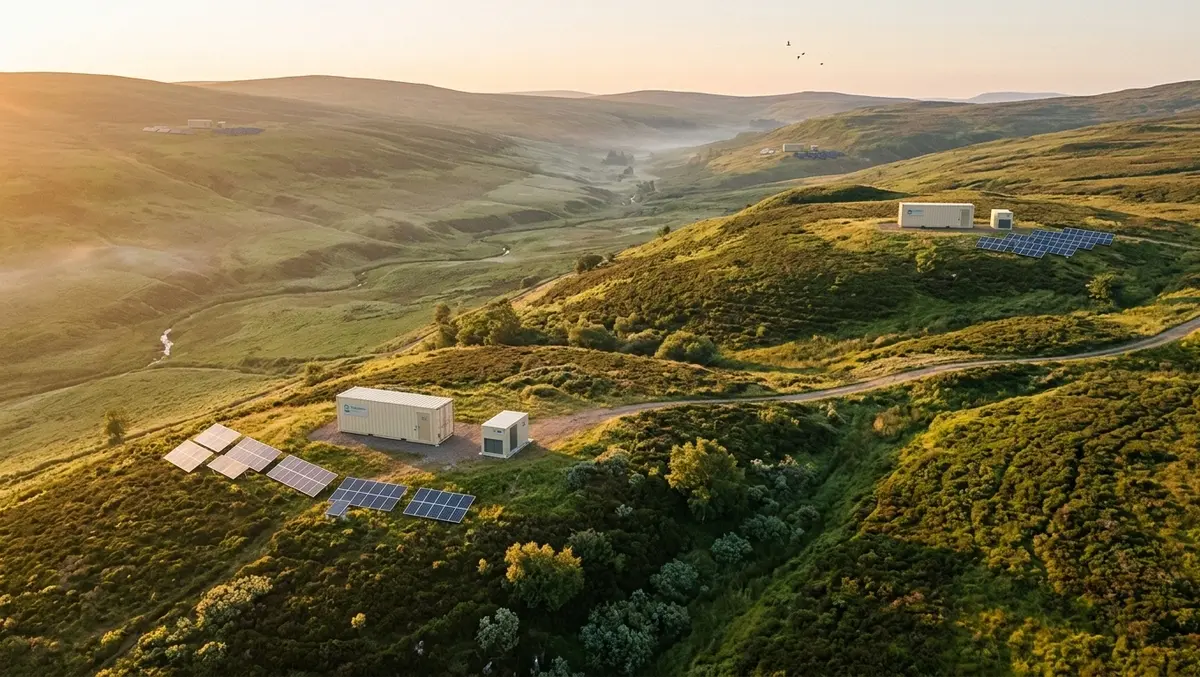
Viridis Data said it was founded to address those issues at the design stage rather than after construction. Its model centres on facilities that do not connect to the national electricity grid, rely on clean energy, use a sealed closed-loop cooling system and expand through smaller modular units rather than single large buildings.
The company argues that this approach avoids competition with households and businesses for electricity and removes reliance on grid connection queues. It also says the use of local climate conditions and a closed-loop system is intended to limit water use, while the smaller physical footprint is meant to reduce pressure on land, noise and night-time light pollution.
Instead of building speculative large-scale sites years before demand appears, capacity would be added unit by unit. Viridis Data said that model is designed to align new supply more closely with actual usage while reducing the visibility and disruption associated with conventional schemes.
Public objections to data centre development have become increasingly consistent across markets. They include concerns about pressure on electricity grids, rising household energy bills, heavy water use, the loss of farmland and countryside, effects on neighbouring homes and property values, constant noise from cooling systems and backup diesel generators, light pollution, years of construction traffic and relatively few permanent local jobs.
Viridis Data said its business model includes both developing its own sites and designing, building and operating facilities for organisations and landowners that want additional data centre capacity without the impacts associated with more conventional projects.
MEL, Founder and Chief Executive Officer of Viridis Data, linked the company's model directly to the political debate shaping the sector. "Governments want the economic and strategic benefits of AI, and communities want to protect their bills, their water and their landscape. Right now, those two goals are colliding in Washington, Brussels, London and Dublin. We believe that conflict comes from how data centres are designed. We started with the problems and built the data centre around them," Louali said.
The company said the design is intended to fit emerging environmental and economic rules in the UK and Europe, particularly those linked to energy and water performance and tighter conditions on access to the grid.
In a second statement, the founder set out how the company sees that policy shift. "Every major economy is now asking the same question: what makes a data centre truly sustainable? Our answer is a data centre that does not need the grid, does not drain local water and does not need to be the size of a town. Countries should not have to choose between digital sovereignty and the communities that host the infrastructure," Louali said.