

Indian firms urged to turn AI pilots into real value
Tue, 26th May 2026
Avaali hosted a roundtable in Bengaluru on enterprise AI prioritisation and governance, focusing on how Indian companies can turn AI adoption into measurable business results.
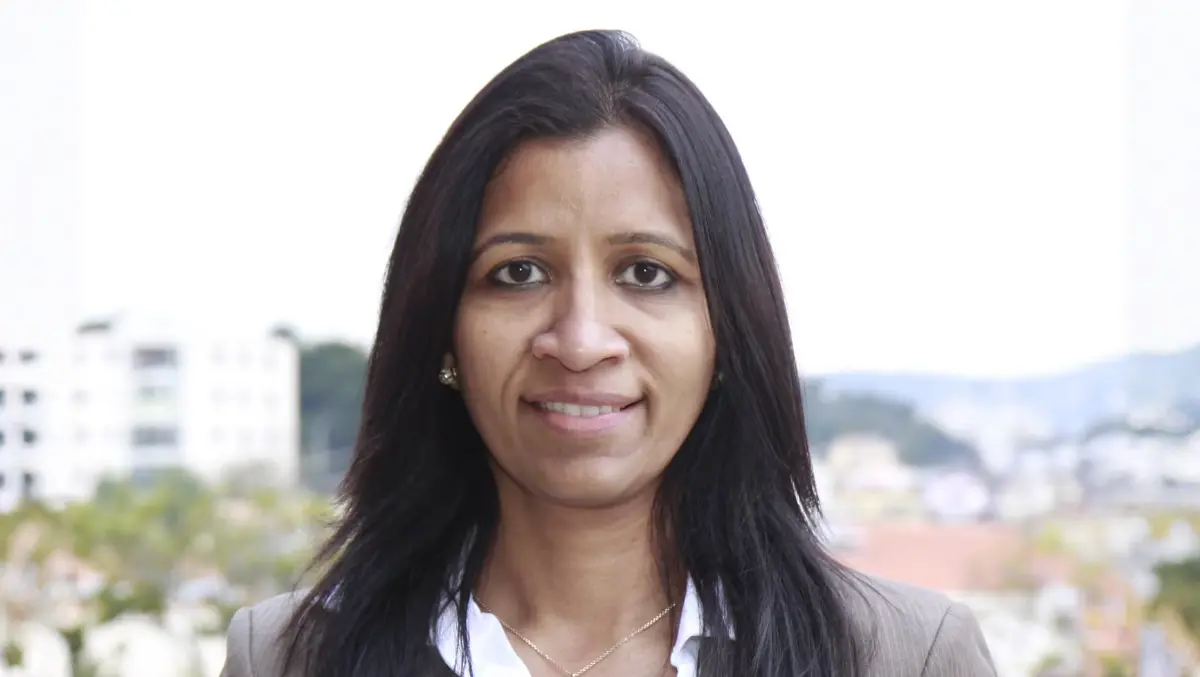
The event brought together Srividya Kannan, Founder and Chief Executive Officer, Avaali; Sanjeev Kumar Gupta, Chief Executive Officer, Karnataka Digital Economy Mission; and Ohmna Sinha, Global Head of Data and Analytics Governance, Nielsen.
The discussion highlighted a gap between the spread of AI tools and companies' readiness to use them at scale. Speakers identified data quality, governance, skills and board oversight as the main barriers to wider operational use.
The debate comes as AI is forecast to add USD $1.7 trillion to India's economy by 2035, while the IndiaAI Mission has allocated INR ₹10,300 crore to support the broader push. At the same time, the Nasscom AI Adoption Index says 87% of Indian enterprises are actively deploying AI solutions.
Readiness gap
Kannan said many companies have moved beyond asking whether AI matters to the practical challenge of implementation.
"India AI story will be written within enterprises. AI adoption is no longer the difficult conversation in most boardrooms; the harder question is readiness. Do enterprises know which processes are worth transforming first, do they have the data and governance to support AI, and can they convert experimentation into measurable outcomes? The next digital divide will not be between companies that use AI and those that do not. It will be between enterprises that can absorb AI into the way they work, decide, and govern, and those that remain AI-curious but operationally unprepared. AI pilots create excitement. AI readiness creates economic value," said Srividya Kannan, Founder and Chief Executive Officer, Avaali.
The panel described an execution paradox: while AI use is spreading quickly, many organisations still struggle to connect pilot projects to productivity gains or broader changes in day-to-day operations.
Gupta placed that issue in the context of India's wider technology base and Karnataka's role within it. He said the state accounts for more than 40% of India's tech sector, has the largest concentration of global capability centres, and nearly 39% of the country's AI startups.
Execution focus
He added that Bengaluru accounts for 30% of AI job postings nationwide, with annual demand reaching 300,000 roles, making the state central to India's goal of building a USD $1 trillion digital economy.
Gupta said India has already built a strong AI supply base through public data sources, the IndiaAI Datasets Platform known as AI Kosh, and the planned addition of 38,000 GPUs. The harder task now, he argued, lies inside companies.
"To bridge the gap and achieve real business value, enterprises must overcome three core operational barriers: real data availability, hybrid skills that blend domain expertise with AI, and bridging the boardroom understanding gap so directors can actively steer investments. Large enterprises must move away from isolated pilots and start publishing concrete case studies on how AI has optimized internal processes. Every technology shift presents friction, but by focusing on execution, we transform challenges into sustained economic leadership," said Sanjeev Kumar Gupta, Chief Executive Officer, Karnataka Digital Economy Mission.
The discussion also touched on the environmental demands of AI infrastructure as computing use rises. Gupta said policy work is under way on a sustainable data centre framework and pointed to domestic technologies such as room-temperature servers from Vigyan Labs and hypercooling systems.
Governance priorities
"There is a huge policy push that we have. We are working to come out with a sustainable data center policy. For the first time, we will introduce a very thoughtful process on how we can make data centres structurally sustainable. As more states and country-level discussions come forward, we will look ahead to embedding more of these sustainability parameters into our foundational frameworks," added Gupta.
He added that growth in Karnataka's technology sector is extending beyond Bengaluru into Mysuru, Hubballi-Dharwad-Belagavi, Mangaluru, Kalaburgi, Shivamoga and Tumakuru.
Sinha focused on governance and the need to avoid using AI where it adds little value. Citing Gartner data showing that around 85% of AI pilots fail to reach production, she said companies should prioritise quality, compliance and practical use cases rather than speed alone.
"Enterprises are no longer asking whether AI matters; they are asking how to operationalize it meaningfully. However, leaders must critically ask: Do we really need AI for every single process? The ultimate metric should not merely be speed; it must be AI Quality First and AI Faster. As organizations mature, success will depend on clean data, clear governance, compliance readiness, and practical use cases that solve real problems rather than chasing hype. India's evolving digital regulatory landscape is making this journey even more critical, encouraging organizations to build with accountability and transparency from the outset," said Ohmna Sinha, Global Head of Data and Analytics Governance, Nielsen.