

Exclusive: DCB Bank balances AI speed with banking risk
Mon, 14th Sep 2026
DCB Bank is moving towards AI systems that can turn intelligence into action, including experiments with agents to scale operations. But the Indian lender will retain human oversight for high-consequence decisions as it balances automation with regulation, explainability and customer trust.
The bank, which primarily serves SMEs and self-employed customers in India, has spent more than five years consolidating fragmented data with Cloudera to make analytics and machine learning more useful within operational processes. Its digital programme covers customer onboarding, acquisition, document processing, credit decisions and complaint handling.
AI guardrails
DCB Bank assesses potential uses of AI according to confidence in a process and the consequences if a decision goes wrong. Highly repeatable, well-understood processes with relatively low consequences are candidates for greater automation, while higher-consequence areas retain human involvement.
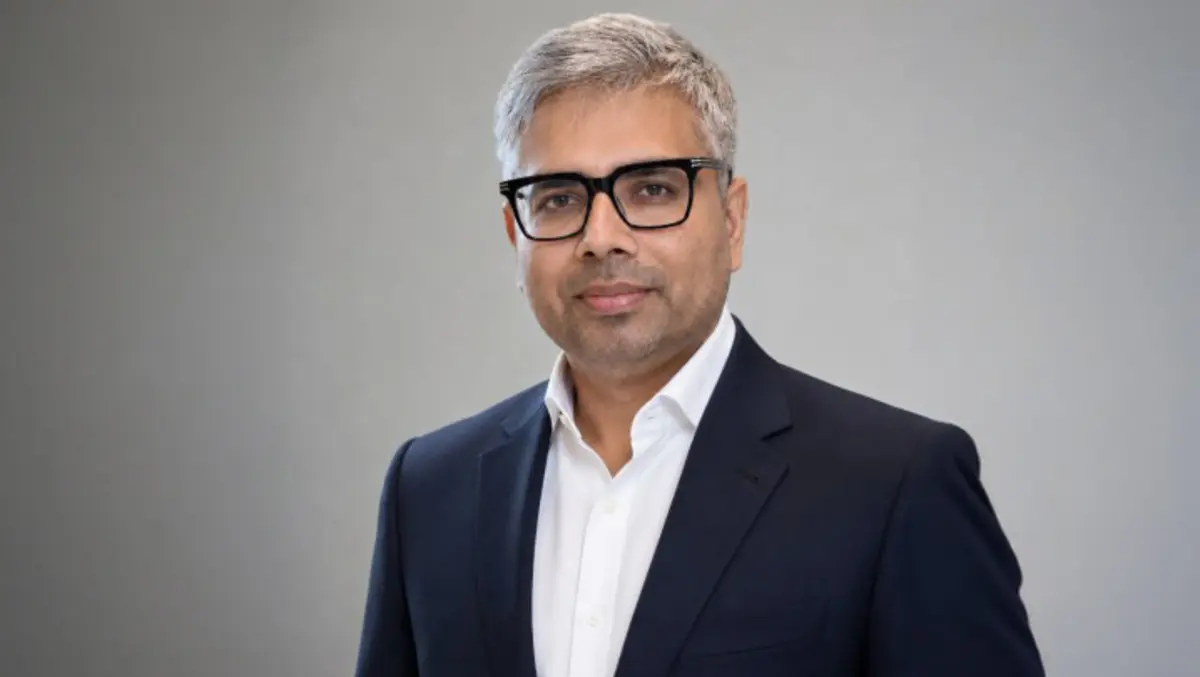
"AI has to be read in context. It's not a unilateral yes, not a unilateral no. AI processes are evaluated in terms of what is the consequence: low consequence, high consequence, high repeatability and low repeatability. Wherever there is high repeatability, there is high confidence in the process, and high confidence and low consequences, we would love to automate. Some of the processes are automated. Wherever we see high confidence but high consequence, we are very careful about putting a human in the loop, at least," said Shashwat Kumar, Head of BIU & Analytics, DCB Bank.
In areas such as financial, credit and market risk involving larger customers, AI primarily supports rather than replaces human decision-making. Applications with both low model confidence and high potential consequences are effectively ruled out.
"Generally, where we would not let a decision be completely AI-made, support is there. Let's say there are risk-based decisions. We have market-based analysis, financial risk, credit risk, etcetera, for large clients. There AI is generally supportive. The decision is still with the human. Then there are low consequences and low confidence. AI recommends, but mostly the rest of the process remains, so it is generally adding efficiency. Where we say high consequence and low confidence, that's a no-no," said Kumar.
This framework also shapes how DCB Bank approaches competition from fintechs and other technology-led financial services providers.
"Banking is not a case where you generally compete with banks only. There are a lot of other players who do the same activity that we do, both in terms of lending and payments. There are fintechs, there are the Google Pays of the world. Evaluate it more from a perspective that it's not a story of us versus others. It's a story around tech agility versus banking depth," said Kumar.
DCB Bank wants to improve its technology agility while retaining the domain expertise and personalised customer relationships associated with an incumbent lender.
Data backbone
The bank's AI strategy follows a longer effort to reduce fragmentation across its technology estate. DCB Bank operates multiple core systems, and bringing data together through Cloudera created a reusable and more trusted foundation for analytics.
The bank has used Cloudera for more than five years. It was already using machine learning before consolidating its data, but those models were more isolated from the systems where operational decisions were made.
"Machine learning was there, but machine learning in a silo is a lot of intelligence which, if it is not embedded into execution, doesn't yield as much as it should, or to the capacity that it has. So yes, machine learning existed, but was it embedded and was it creating the kind of yield? No. It really helped to put things in place and perspective. Knowing is not enough because the person who knows and the person who acts need to get connected, and if it happens over an asynchronous methodology, which is sending an email, sharing on an Excel, putting it on an SFTP, there's a loss of information ending up in action," said Kumar.
Connecting analytics with operational systems has become more important as banks seek to make decisions within minutes or seconds rather than rely on asynchronous exchanges between teams.
"In today's world, especially when you're looking at onboarding customers in less than three minutes or less than two minutes, you're taking decisions in less than one minute for a credit card. If you think of an asynchronous means of connecting the executor versus the intelligence, it may lead to a risk. It's in that zone. This is a high-consequence zone, and hence I would say it was completely pivotal for us to bring everything into one place and have everything connected," said Kumar.
The progression has been from describing what happened to understanding why, predicting what is likely to happen and prescribing a response. DCB Bank is now testing how much of that prescribed response can itself be carried out by AI.
On-premise stance
DCB Bank remains primarily on-premise for AI and data workloads involving its own information. It develops models internally and limits the movement of data outside its infrastructure, while retaining scope to use frontier models with public information.
Technology choices are based on the required outcome and associated risk rather than a preference for a single model, infrastructure option or AI platform.
"We generally categorise the actions based on the outcomes or the problem statements rather than tech. Things where we have high consequences and low confidence, it's still Excel, it's still people in the picture. Things where we have high confidence, low consequences, we have brought in internally developed models, primarily SLMs, and to some extent we also use frontier intelligence, but there is no data that goes out. We have minimised our cloud usage to an extent that there is nothing flowing out. We are primarily an on-prem bank, and we intend to develop most of the things internally, not against cloud or frontier intelligence, but very conscious about data, governance and regulation," said Kumar.
Explainability remains a constraint on wider adoption in regulated decision-making because responsibility for an outcome ultimately stays with the bank rather than the model or technology provider.
"If there is no explainability of the decisions that we are making, we can definitely rent the model, but we will not be able to rent accountability. For any decision which is made by a regulated entity like a bank, it is not the model which is accountable. It is always the bank. Look at the transfer of accountability," added Kumar.
For information relevant to DCB Bank's business, including but not limited to personally identifiable information, the preference is for internally built models. Frontier models can play a greater role where public information or India's digital public infrastructure is involved, including UPI and account aggregators.
"Security, data security remains paramount. Following the regulator remains paramount, and most importantly, keeping customer trust remains the key to decision-making on what AI we want to use or are not going to use," said Kumar.
Faster change
The next stage is a shift from "intelligence to action". Having consolidated information, reduced operational friction and developed predictive and prescriptive capabilities, DCB Bank is examining where agents can undertake parts of a process in high-confidence, lower-consequence cases.
"Right now, we are evaluating a lot of, if we know what can be done, how much of that can be done within that low-consequences and high-confidence quadrant, and we are on a journey of looking at intelligence to action, so bringing in some of the agents and seeing if it could help scale the ops," said Kumar.
Rapid advances in AI are also creating a skills challenge. DCB Bank is developing talent internally, working with universities and using vendors where it needs immediate expertise. Much of its IT and intelligence capability remains in-house rather than being outsourced wholesale.
"To an extent, there is a shortage of talent, and we are trying to deploy measures around building talent in-house and also renting talent as and when there is a requirement," said Kumar.
Kumar sees three variables changing simultaneously: the underlying technology, regulators' policy response and financial services business models. The combination makes long-term technology planning harder because systems considered too opaque for regulated decisions today could become more explainable as the technology develops.
"There are three things which are evolving at the same time. One is the tech itself is evolving, and that's in a constant mode. The consequences have not been looked at from an experimentation perspective. We are not very clear what can go wrong in the next two years, three years, four years. So there is a constant change in tech, and there is a constant evaluation of what can go wrong, so basically risk evaluation. The second thing which is evolving is regulators' response and policy to it," said Kumar.
Technology is also changing the economics of banking services as competitors gain access to capabilities that were previously harder or more expensive to develop.
"The third thing is also the response of business models to changing technology. What made sense five years back may not exactly make sense right now. A lot of business models depend on the asymmetry of information that we can address, and with AI evolving at the pace that it is, a lot of that opacity is gone. It's not always between the customer and the bank. It is also about how the other players are coming in and whether that is profitable enough for us to pursue or not pursue," added Kumar.
Despite the emphasis on speed and automation, DCB Bank continues to serve customers who cannot or do not want to adopt every new digital process, including some older customers with lower levels of technology use. Dedicated teams continue to serve them through other channels.
"There are always a set of customers, maybe not in large numbers, who wouldn't choose the efficiency that we would want to bring into the system. Having said that, there are customers, and there is a team that takes care of these customers the way that they are. So we value relationships more than we value technology at this point, or forever, I guess," said Kumar.