Life sciences stories
The trial could help doctors spot eligible patients sooner and bring research findings into routine care, improving evidence generation.
Researchers and startups could gain easier access to AI tools, training and European computing power as the Commission teams up with Nvidia.
Only 5.2% of organisations in Australia and New Zealand have scaled AI beyond pilots, with structure and workflows proving the biggest barriers.
Keeping customer and transaction data in-house, the software aims to cut the need for copied databases as firms train AI models.
Most life sciences manufacturers now see digital transformation as essential, with 54% reporting a cyberattack in the past year and many eyeing AI.
The construction consultancy's next phase of growth will be led by an internal appointee as it expands across 44 offices in 30 countries.
Europe's enterprise AI debate will centre on data sovereignty and governance as banks, drugmakers and universities gather in London.
Many security chiefs expect to curb AI agent use within 18 months as fears grow over unauthorised access and weak audit trails.
Lower running costs and faster output are aimed at businesses using Anthropic's latest Claude model, which starts at USD $4 per million input tokens.
Startups could file patent applications in days after Fearn raised USD $5.5 million to offer fixed-fee AI prosecution services.
More than a third of industrial decision-makers now see cyber risk as a top barrier to growth, a Rockwell survey found.
The funding will help Tamr speed up development of agentic features as enterprises struggle to make fragmented records usable for AI systems.
Weaker bookings weighed on Wipro's outlook even as the IT outsourcer lifted margins and generated ₹53.0 billion in operating cash flow.
Despite rapid adoption, UK firms are struggling to turn AI spending into measurable gains, with trust and returns still out of sync.
The expansion gives the group a bigger base to serve Southeast Asian customers and train talent as manufacturers step up research in Singapore.
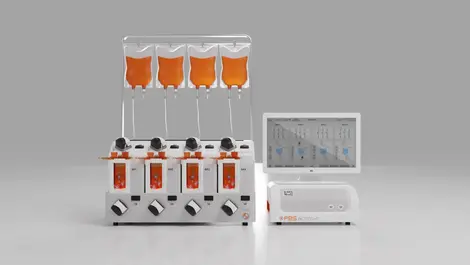
The setup should ease cell therapy scale-up by giving developers industrial-grade control and more reproducible data before GMP production.
Britain's life sciences start-ups could get a lift as the British Business Bank injects GBP £135 million into two Advent funds.
The new group could help New Zealand researchers turn lab breakthroughs into medicines, materials and cleaner industrial processes faster.
Enterprise partners now face far less due diligence, after the health tech platform cut questionnaire length from 50 questions to single digits in weeks.
Researchers and startups will gain Claude API credits as the new funding backs cancer, heart disease and rare-disease work across Australia.



















.webp)