

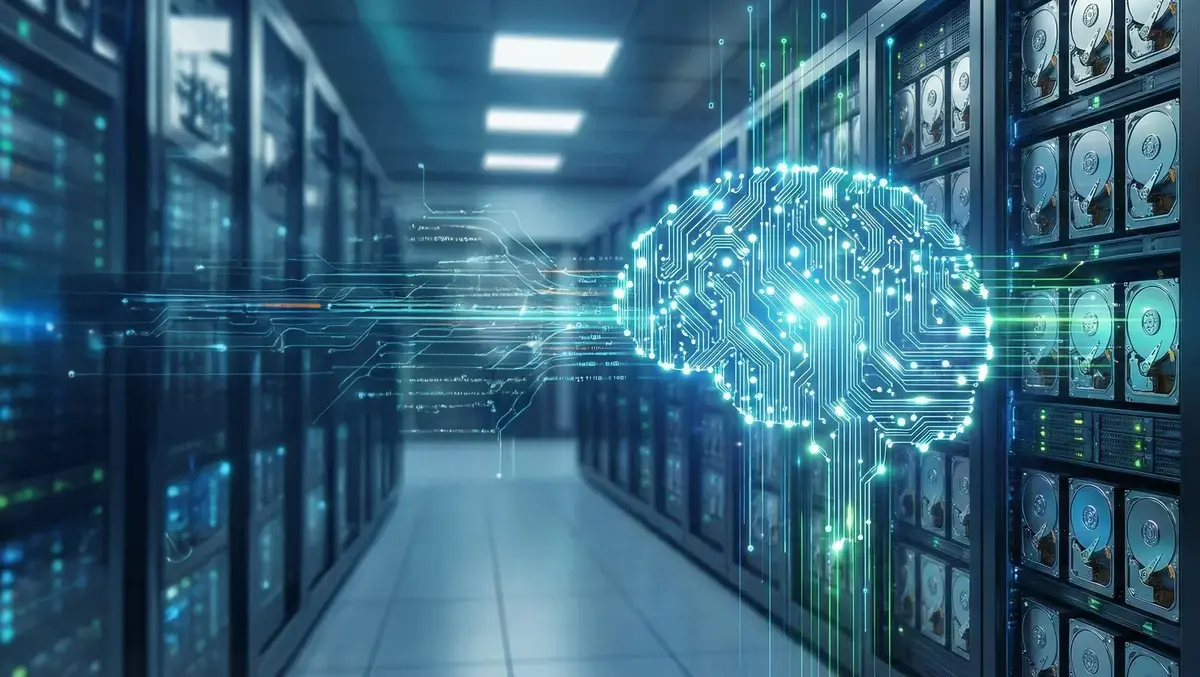
How organisations can recognise, future-proof storage in the AI era
Tue, 9th Dec 2025
Every enterprise wants to be future-proof – resilient enough to thrive amid change. But in an era where AI is reshaping every aspect of business, and technology itself is evolving faster than ever, what does "future-proof" really mean for storage?
For enterprises, the answer starts with a solid foundation of hard disk drive (HDD)-based storage. Traditional storage architectures were designed for predictable, static workloads. Today, with AI applications continuously learning, retraining, and scaling, storage must be cost-efficient, adaptable, and reliable at massive scale. Future-proofing storage means building an infrastructure that can grow with data demands, handle unpredictable workloads, and sustain long-term performance and durability, all while keeping costs and energy use in check.
The rise of AI has fundamentally changed the game: workloads have become dynamic and data volumes are expanding at unprecedented rates, demanding infrastructure that scales effortlessly to support continuous innovation. According to Market Data Forecast, the Asia Pacific AI market is projected to grow at nearly 40% compound annual growth rate (CAGR) to $1.365 trillion by 2033.
To keep pace, enterprises must redesign their storage infrastructure to be future-ready. A truly future-proof storage strategy rests on three pillars: scalable economics, dynamic adaptability, and sustainable operations.
The HDD foundation
AI's data demands are enormous – and growing rapidly. Managing the explosion of unstructured data, now measured in petabytes, has become one of the biggest challenges facing organisations today. According to IDC, in 2025 more than 86% of enterprise data generated will be unstructured, which will grow at a 26.4% CAGR over the next five years. Without the right storage strategy, costs can quickly spiral out of control.
To address this, enterprises are turning to strategic and automated tiering, with HDDs serving as the economic backbone. HDDs remain indispensable to hyperscale and cloud data centres, with nearly 80% of storage within the cloud still residing on hard drives by 2029, according to IDC. Their economics at scale, reliability, and performance make them the foundation of sustainable data growth. They deliver predictable total cost of ownership (TCO), allowing enterprises to store and analyse vast datasets efficiently without unsustainable capital or operating expenses.
AI is making "cold" data valuable again, transforming archives into actionable insights. HDD-based storage supports AI workflows by keeping massive datasets accessible at economical scale for training and retraining models, while higher-performance flash is reserved for inferencing and metadata operations. This illustrates why HDDs remain the backbone of AI, providing the scale, reliability, and efficiency required for modern workloads.
Storage tiering that scales with data
In the age of AI, data is constantly in motion, shifting between hot, warm, and cold tiers depending on how and when it's used. Enterprises need infrastructure that can keep pace with this fluidity. Future-proof storage must support automated tiering, scale-out architectures, and intelligent, software-defined management. These capabilities orchestrate data movement across storage tiers seamlessly, without manual intervention, optimising both cost and performance.
Here again, HDDs play a central role. They serve as the foundation for data lakes, the central repositories that store and transform massive volumes of structured and unstructured data. With open APIs, flexible access protocols, and interoperability across storage media, HDDs integrate seamlessly with AI pipelines.
Adaptability also means resilience. Modern HDD-based infrastructures can scale up or scale out to meet surging data demands without costly migration or downtime. Innovations such as energy-assisted magnetic recording (EAMR) and dual-actuator designs further boost performance, offering faster rebuilds, higher throughput, and better energy efficiency to match the real-time demands of AI workloads.
In short, HDDs provide the foundation that allows data to support every stage of the AI journey – from ingestion to training, retraining, and compliance – ensuring enterprises remain agile in a rapidly shifting data environment.
Building long-term viability
AI promises to be transformative, but it also brings significant energy costs. Training a single large AI model can consume as much power as hundreds of homes use in a year. According to PwC, electricity demand in Asia Pacific is projected to rise from around 320 TWh in 2024 to 780 TWh by 2030, yet only about 32% of this will be met by renewable energy.
Sustainability is no longer a corporate buzzword – it's a business imperative. In Asia Pacific, governments and enterprises across the region are recognising this reality. For example, Australia is capitalising on abundant solar and wind energy, with hyperscalers signing large Power Purchase Agreements in order to green their capacity portfolios.
Energy-efficient storage has become a procurement priority. High-capacity HDDs, in particular, allow enterprises to consolidate workloads and reduce overall power consumption per terabyte while maintaining performance and reliability. For example, replacing 24TB HDDs with 32TB HDDs to deploy 2PB of storage can reduce server count by 25%, cut energy consumption per terabyte by 20%, and lower infrastructure and maintenance costs.
Strategic storage architectures that leverage HDD economics, combined with deduplication and compression, enable organisations to scale AI responsibly while improving operational efficiency and supporting environmental commitments. The result is a storage ecosystem that balances cost, performance, and sustainability – the very definition of future-proof growth.
The future-proof formula
Building future-proof storage requires more than just speed. It demands a holistic approach that integrates scalable economics, dynamic adaptability, and sustainable operations. Each pillar reinforces the others: sustainable economics ensures data can grow economically at scale; dynamic adaptability enables storage to respond intelligently to ever-changing AI workloads; and sustainable operations make that growth environmentally and financially viable.
At the heart of this approach are HDDs, which provide the reliability, cost-efficiency, and performance needed to support AI at scale. By combining these elements, enterprises can create a storage architecture that is resilient, responsive, and ready for the long term, forming a foundation capable of supporting both today's AI initiatives and tomorrow's innovations. Recognising storage as a strategic enabler positions organisations to unlock AI's full potential without being overburdened by its operational demands. The time to build this future-proof foundation is now.